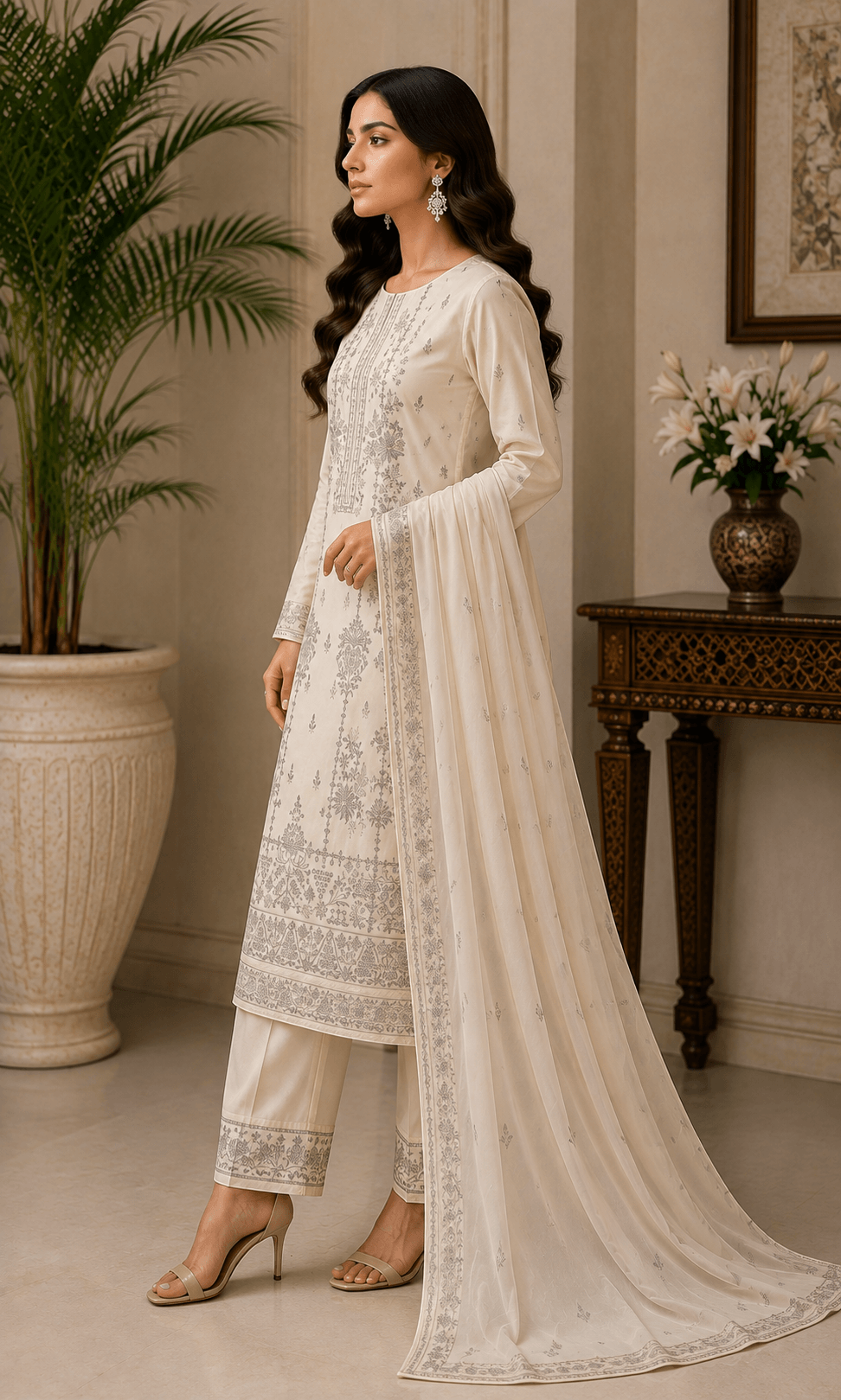
Intricate embroidery is not fragile. It is simply unforgiving of the wrong routine.
We use premium threads and fine cloth — lawn, cotton, viscose, dhank and khaddar, with chiffon dupattas — and all of it will hold up for years if you get four things right.
1. Wash cold, wash gently, wash separately
Hand wash with a mild detergent in cold water. The first wash matters most: deep dyes can release a little colour initially, so wash the suit on its own that first time. Never scrub directly over threadwork, and skip bleach entirely.
If you must use a machine, choose the gentlest cycle available, turn the shirt inside out, and use a mesh bag for the dupatta.
2. Do not wring, and dry in shade
Twisting a heavily embroidered shirt drags the stitches out of alignment, and the damage does not come back out. Press the water out gently between your palms or in a towel, then dry the garment flat, inside out, away from direct sun. Sunlight is what fades a good dye fastest.
3. Iron from the reverse, on medium
Always press from the wrong side at a medium setting. A hot iron on the face of the fabric will flatten the raised texture that the multi-head work exists to create, and can dull the thread's sheen permanently. For stubborn creases near a motif, place a thin cotton cloth between the iron and the embroidery.
4. Store so the fabric can breathe
Keep pieces in breathable cotton garment bags rather than sealed plastic, which traps humidity and can yellow light shades. Store away from direct light, and fold along different lines each season so permanent creases do not set into one place.
One note before stitching
Natural fabrics shrink slightly on the first wash. When you hand lengths to your tailor, mention that the cloth is unwashed so they can allow for it — the alternative is a perfectly stitched shirt that is suddenly a centimetre short.
Follow this routine and the suit will look considered rather than tired. Full fabric details for each article are listed on its product page in the shop.